 Relay
Relay
Relay: A Companion Bead Bracelet for Aphasia
A tactile bracelet that helps people with aphasia express without reaching for a screen.
Recognition



Restoring communication — with dignity, discretion, and ease.
Aphasia, most commonly caused by stroke or brain injury, can impair speaking, understanding, reading, and writing. Existing AAC tools are often effective — but visually demanding, clinically coded, and socially conspicuous. Relay explores a different interaction model: one that lives on the wrist, responds to touch, and is hidden from view.
Three beads. Three phrase families.
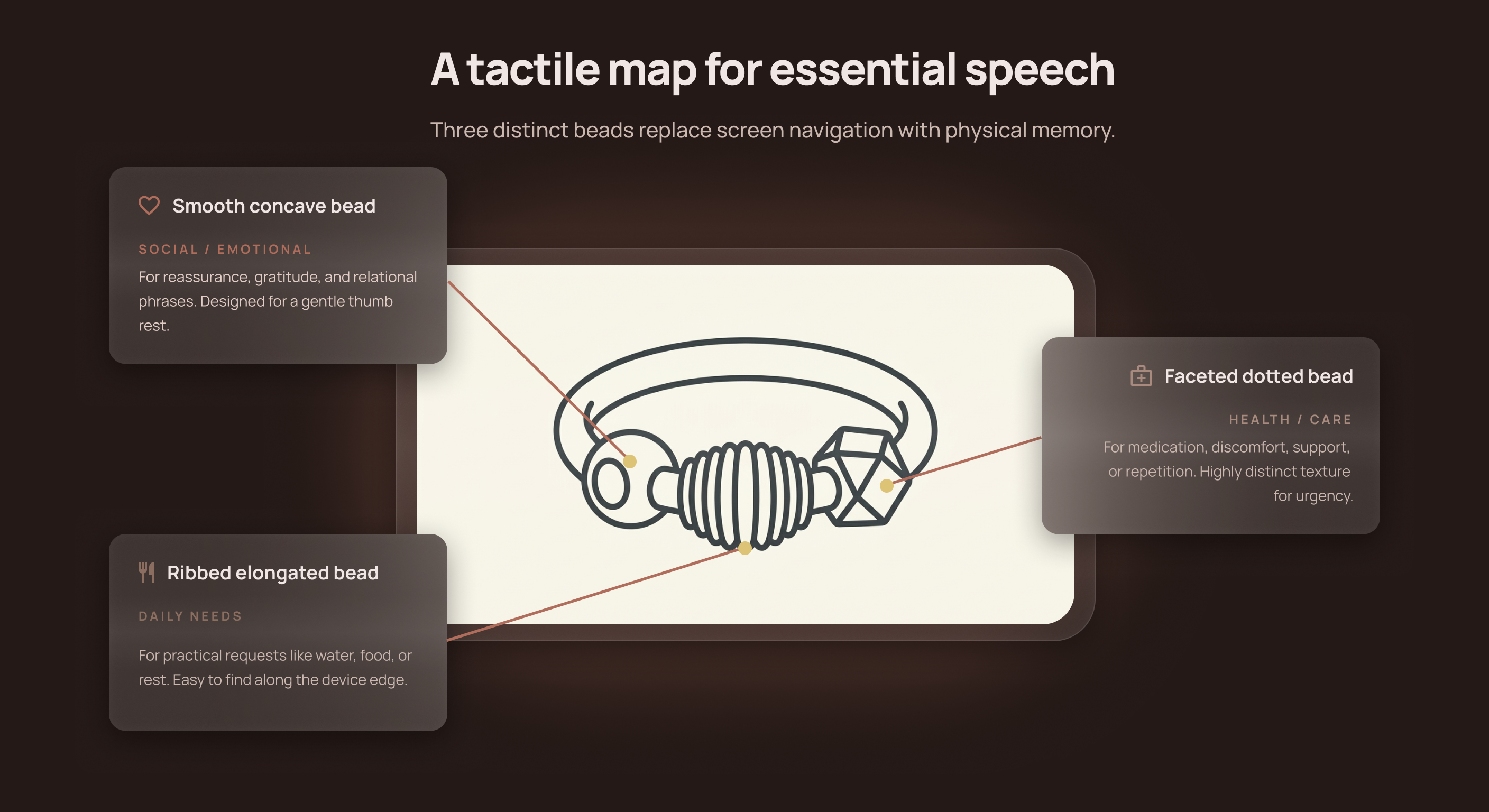
Relay replaces a central screen with three distinct tactile beads, each shaped to represent a stable family of phrases. Because every bead has a unique geometry and texture, the wearer can identify it without looking down.
-
Smooth, concave — social and emotional phrases.
-
Ribbed, elongated — daily needs.
-
Faceted, dotted — health and care requests.
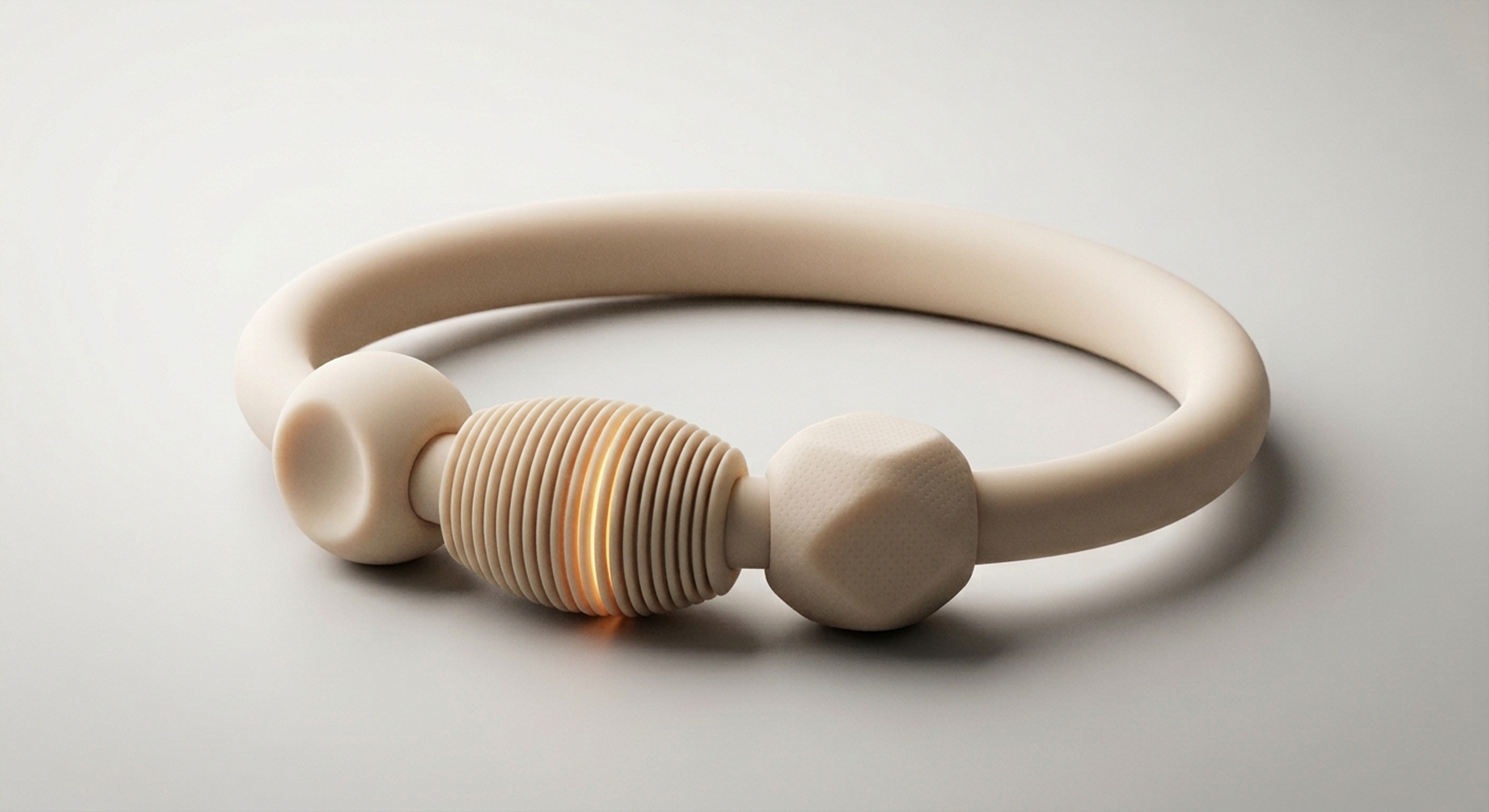
Distinct phrases under the fingertips.
Each bead anchors a category of expression that stays stable over time. The wearer builds muscle memory — so instead of scrolling through a phrase grid, they simply reach.
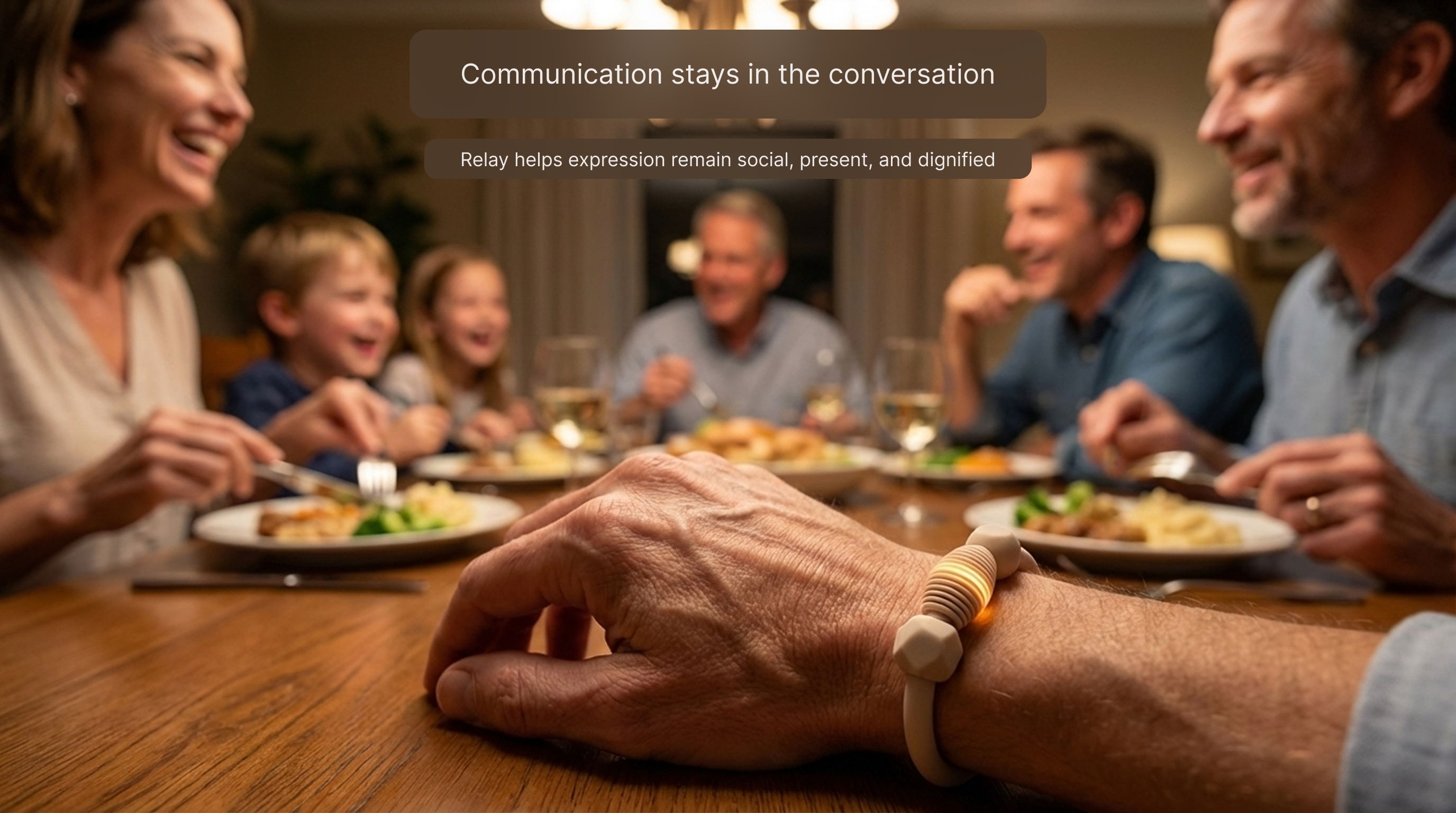
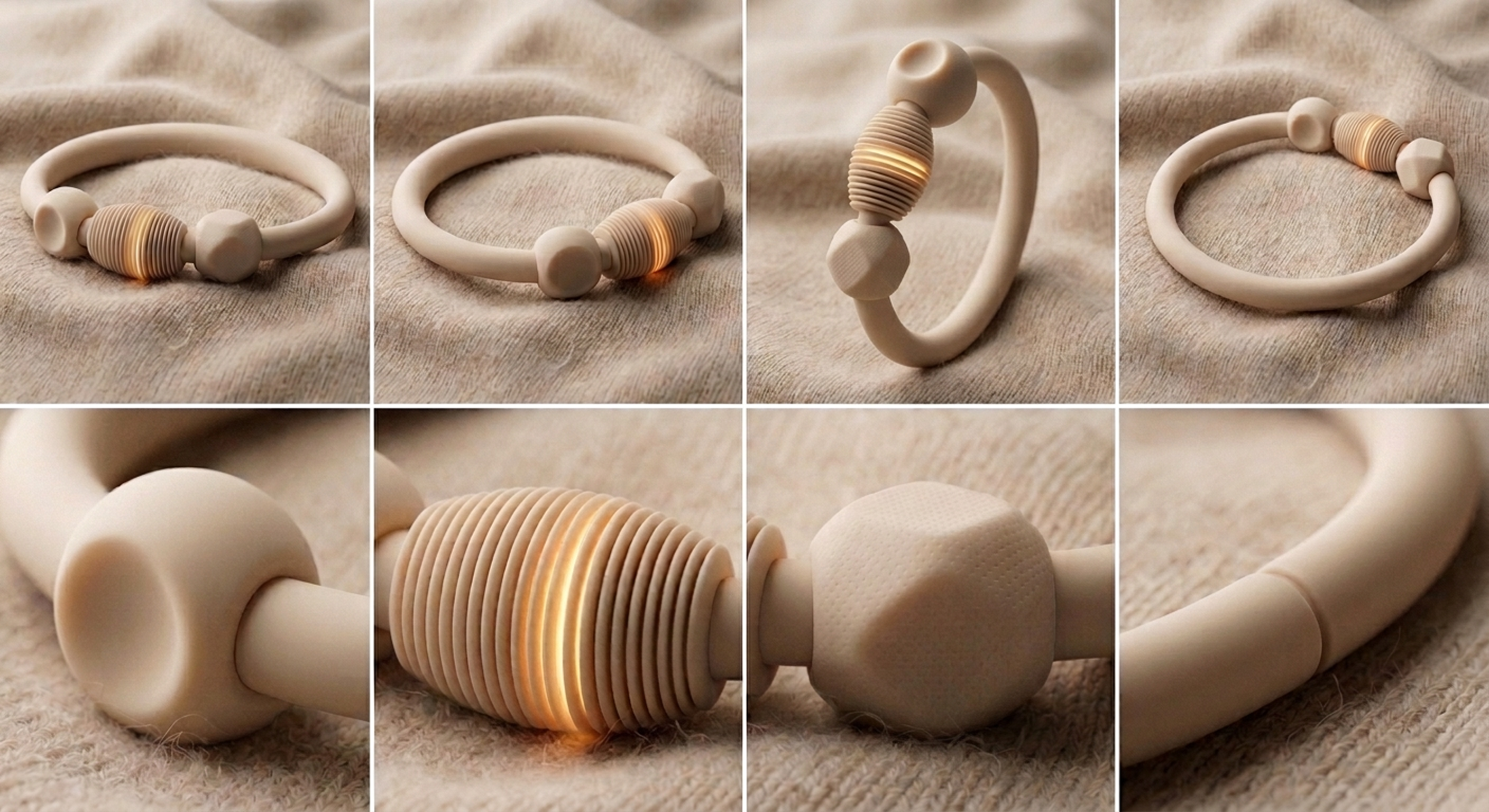
Bracelet-like, not medical-looking.
Relay is tuned for long wear and social presence. Soft matte materials, warm neutral tones, silicone-elastomer overmolds. The beads sit proud of the band so they can be found by touch, but never catch on sleeves. The goal is not only to help someone speak, but to let them remain socially present while doing so.
Details the fingers can read.
Texture is the interface. Ribs, facets, and curvature give the wearer a reliable map of what each interaction will do — before they commit to it.
A small vocabulary of touch.
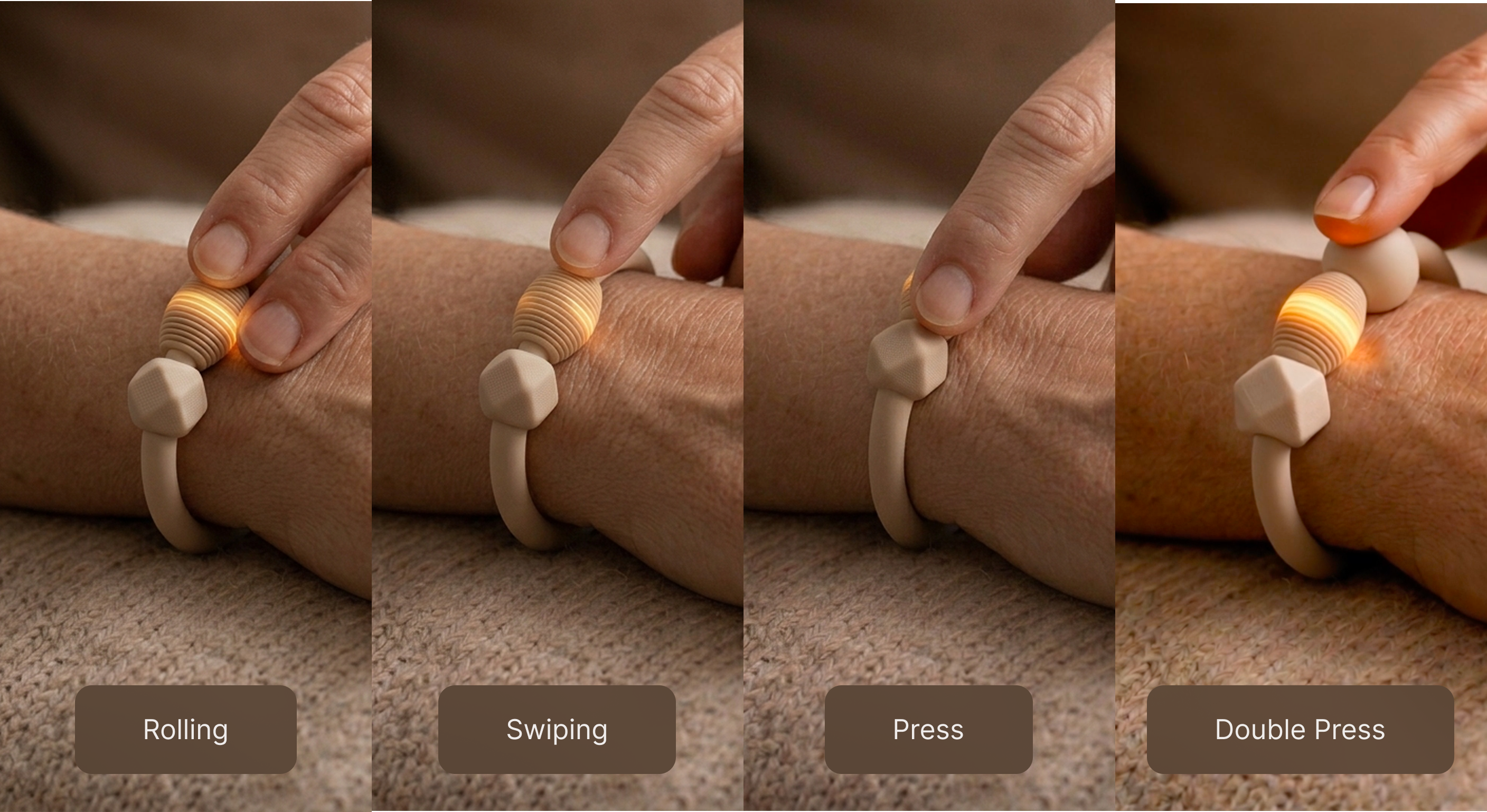
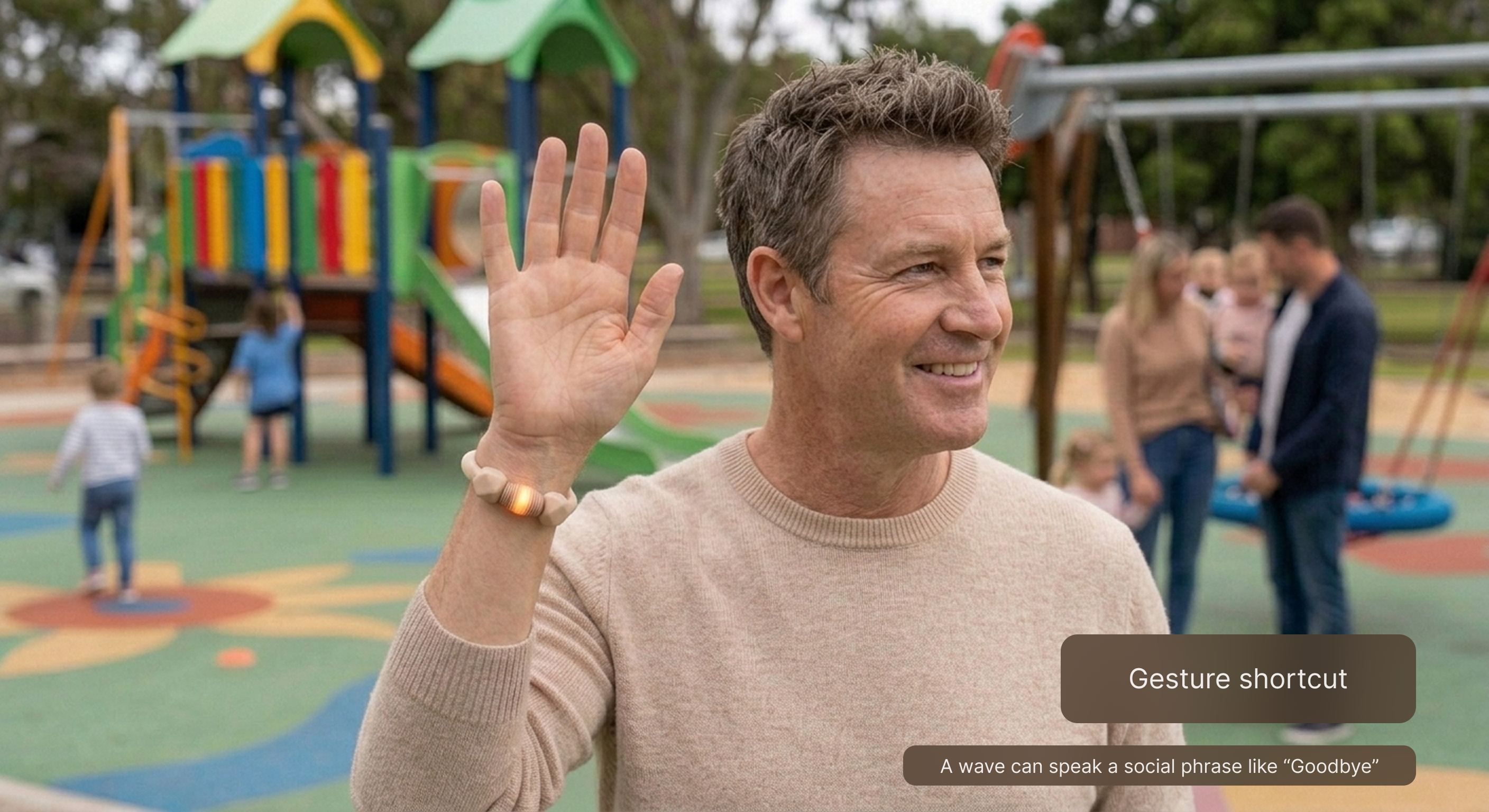
Simple gestures — single press, double press, and swipe or roll — make at least nine high-frequency phrases immediately accessible. The wearer doesn't memorize menus; they memorize motions.
Haptic feedback and a subtle light ring confirm the selected phrase before it is spoken aloud — reducing ambiguity and accidental activations. The wearer stays in control of what leaves their body.
The phrases that do the most work.
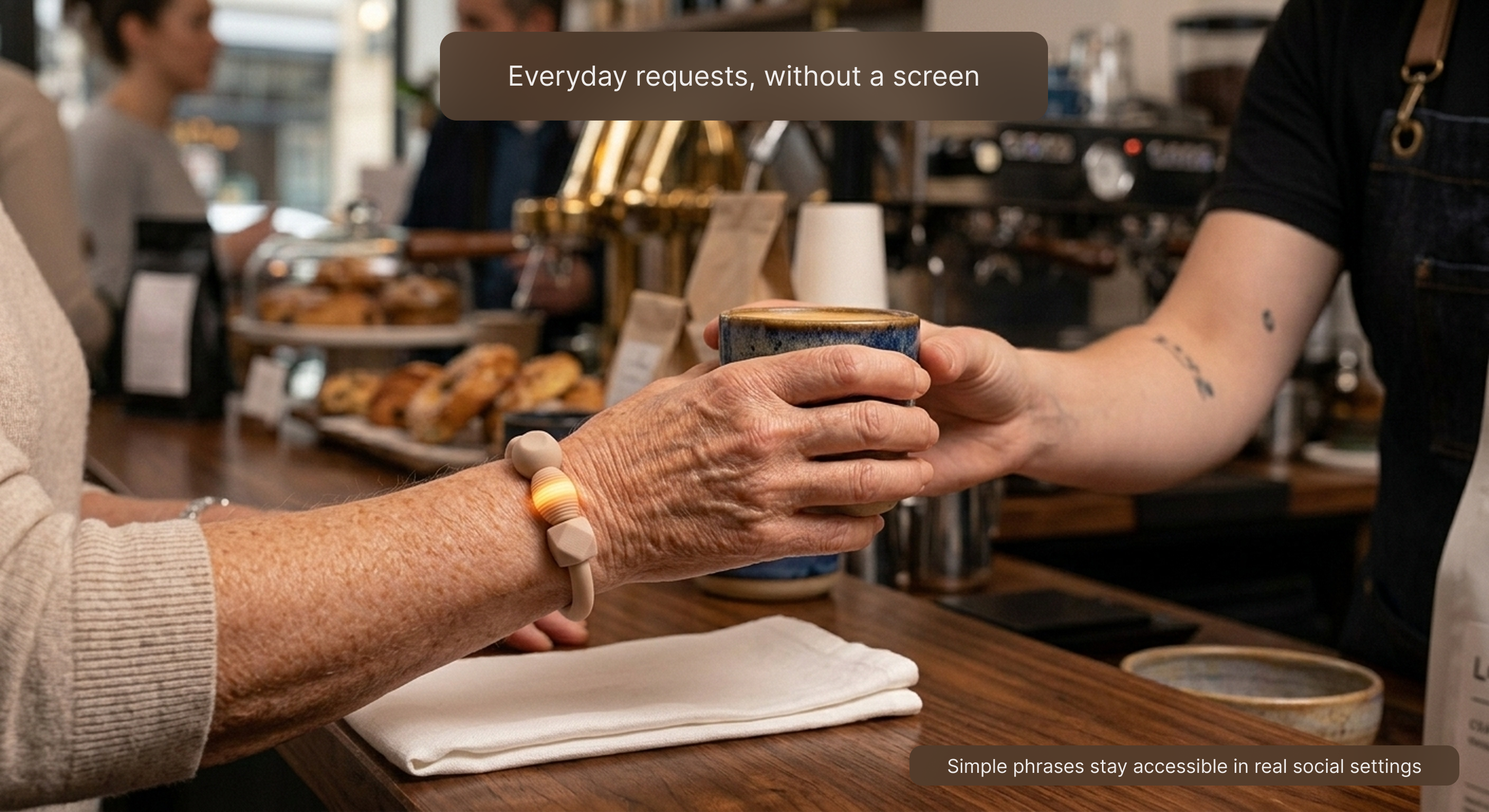
Water. Tea. Thank you. Yes. No. Not now. The small, high-frequency requests that shape a day — immediately accessible, without unlocking a phone or pulling out a board.
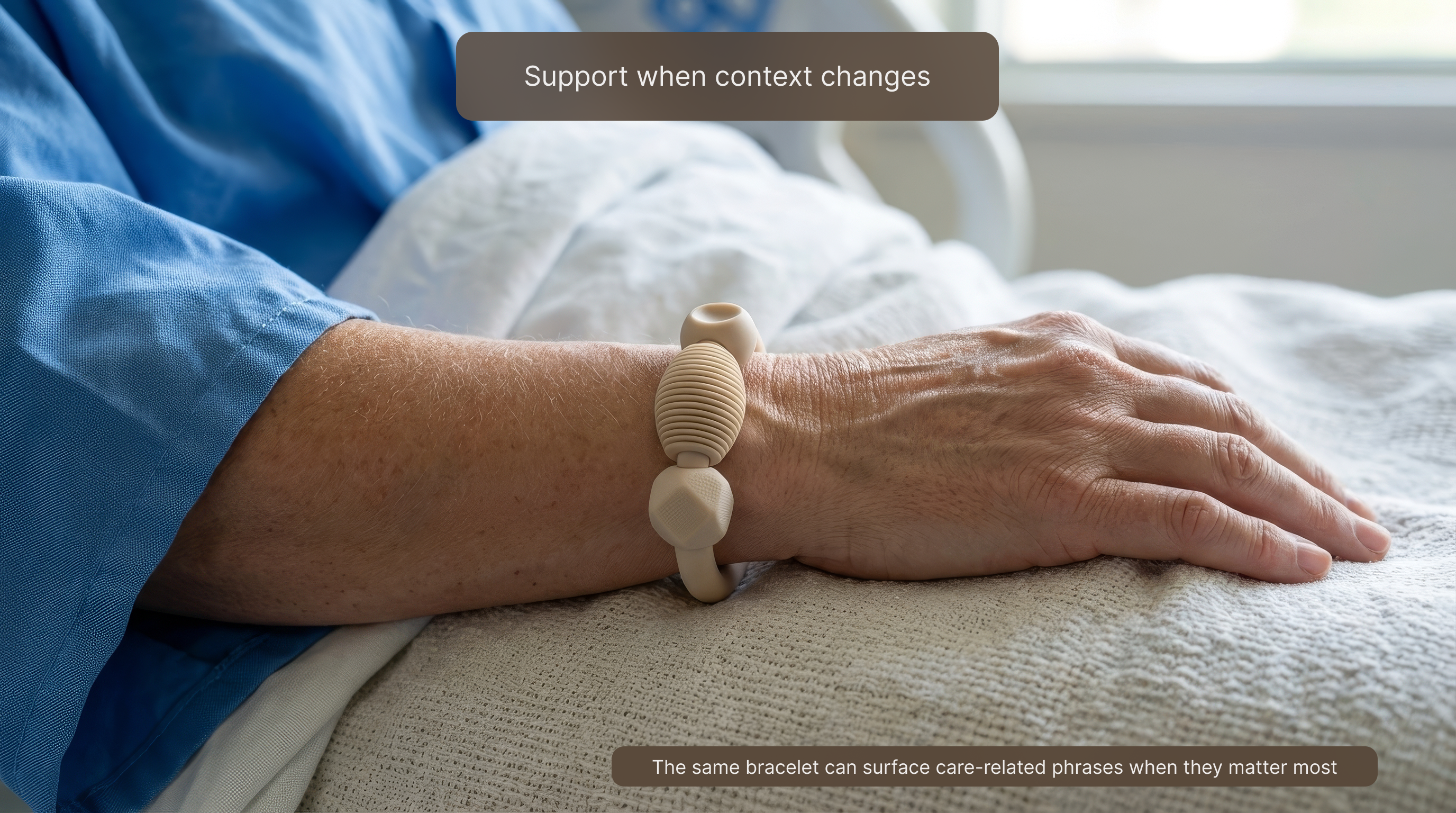
The right phrases, for where you are.
At home, Relay may prioritize water, tea, and thank you. In a clinic, it surfaces medication, pain, or please repeat. Context-aware phrase switching reduces the burden of navigating a large vocabulary — the band always feels tuned to the moment.
A familiar voice.
The paired app reconstructs a familiar voice from old recordings, organizes phrase libraries, and syncs custom phrase sets to the bracelet. Caregivers and speech therapists can collaborate on vocabularies without ever touching the band.
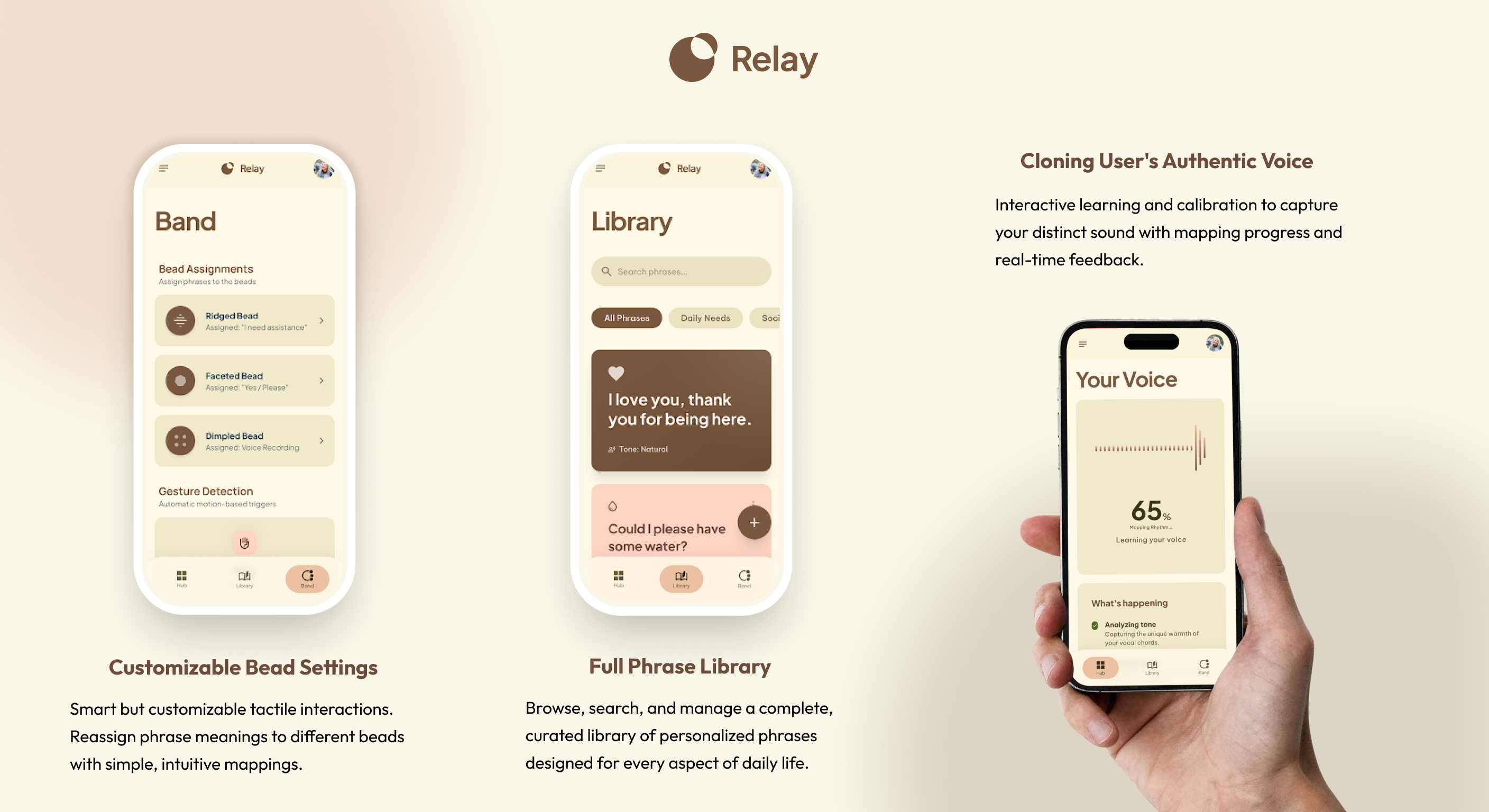
Intuitive. Tactile. Designed for dignity.
Relay is built around existing technologies — pressure and capacitive sensing, low-power Bluetooth, compact haptics, a micro-speaker, rechargeable battery architecture, and app-based phrase management. The form lends itself to modular construction and more sustainable material strategies: silicone-elastomer overmolds, repairable electronics, recyclable packaging.
Assistive communication can be quiet. It can be worn. It can look like a bracelet, not a device.